
GET (Green Electricity Tariff) program in Malaysia
March 18, 2026
The Green Electricity Tariff (GET) is a program introduced in Malaysia to support the country’s transition towards renewable energy (RE). It was first announced by the Ministry of Energy and Natural Resources (KETSA) in November 2021 and officially launched in 2022.
According to the National Energy Balance 2021 (issued by the Energy Commission in 2024), Malaysia’s electricity generation mix in 2021 consisted of:
- 49.2% coal
- 30.7% natural gas
- 19.6% renewable energy
- 0.5% oil
How GET Affects Your Electricity Bill?
At its core, this program is subscription-based where consumers pay a premium to purchase electricity from renewable sources. However, its financial impact depends heavily on Malaysia’s electricity pricing mechanism.
When GET was first launched, it provided cost-saving benefits, particularly during periods when the Imbalance Cost Pass-Through (ICPT) surcharge was high. Under ICPT, electricity users were required to pay additional charges on top of the base tariff—up to:
- 20 sen/kWh for commercial and industrial users
- 10 sen/kWh for high-usage domestic consumers (>1,500 kWh/month)
For example, in July 2023:
A factory consuming 100,000 kWh would pay:
- RM33,700 (base tariff at RM0.337/kWh)
- RM17,000 (ICPT surcharge at RM0.17/kWh)
- Total: RM50,700
If the same factory subscribed to GET:
- RM33,700 (base tariff at RM0.337/kWh)
- RM3,700 (GET premium of RM0.037/kWh)
- RM0 in ICPT (exempted for GET subscriber)
- Total: RM37,400
This translates into a saving of approximately RM13,300 (~26%) for that month.

However, this cost advantage is conditional. In July 2025, ICPT was replaced with the Automatic Fuel Adjustment (AFA) mechanism. Under AFA, electricity pricing may include rebates (negative adjustment) instead of surcharges. In such cases, subscribing to this program may increase electricity costs, as consumers still pay the GET premium without benefiting from surcharge exemptions.
Additionally, subscription pricing may depend on factors such as subscription duration and account ownership (tenant vs. owner), which can influence the premium rate.
How GET Supports Your ESG and Sustainability Goals
Beyond cost considerations, GET plays an important role in supporting corporate sustainability and ESG commitments.
Currently, Ministry of Energy Transition and Water Transformation (PETRA) offers approximately 550 million kWh of renewable energy per month under this program. Once subscribed and redeemed, this green energy is injected into the national grid, contributing to a cleaner overall energy mix for the whole nation.
Subscribers receive a Malaysian Renewable Energy Certificate (mREC) issued by Tenaga Nasional Berhad (TNB). These certificates are internationally recognised, as they comply with the I-REC Standard (International Renewable Energy Certificate) framework.
Each mREC includes:
- A unique serial number
- A formal “retirement” statement issued under the company’s name
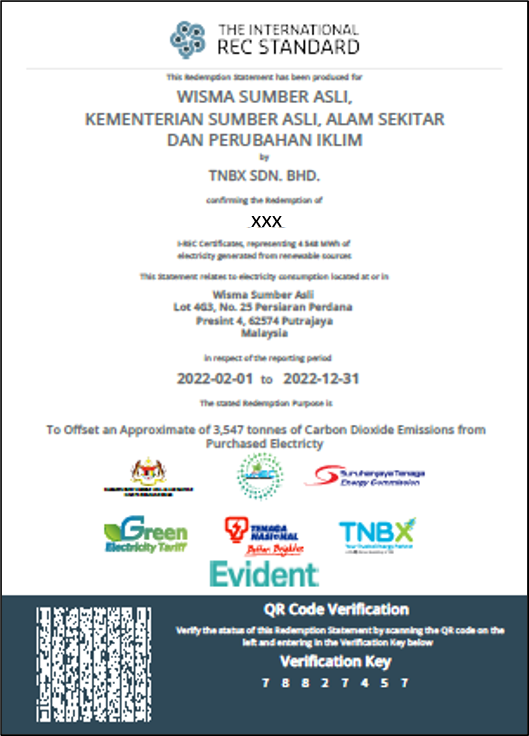
This provides credible, traceable evidence for renewable energy claims in sustainability reporting. mRECs are widely accepted in ESG frameworks and disclosures, including CDP, RE100, and SBTi.
Importantly, under the GHG Protocol Market-Based Method, mRECs are considered a valid mechanism for decarbonization through renewable energy sourcing, rather than carbon offsetting.
How Thinkinbio Can Support Your Energy Transition and ESG Goals
As global market has increasing ESG expectations on Malaysia’s busineses, practical implementation can be complex. Thinkinbio supports organizations in translating these requirements into actionable and measurable strategies.
Our services include:
-
Carbon footprint advisory – identifying key emission sources and opportunities to reduce Scope 1, Scope 2, and relevant Scope 3 emissions
-
SBTi-aligned reduction planning – assisting companies in developing structured decarbonisation roadmaps in line with Science Based Targets initiative (SBTi) requirements
-
Energy Attribute Certificate (EAC) strategy – providing guidance on renewable energy sourcing options, including mechanisms such as mREC and other internationally recognised certificates
By combining technical knowledge with practical industry experience, Thinkinbio helps businesses adopt a structured approach towards decarbonisation, ensuring alignment with both local initiatives such as GET and global sustainability frameworks.
Want to learn how we can support your goals?
Explore more about our services here.
Let us walk the journey of responsible business with you.
Share the article on social media: