
Understanding how to Calculate GHG in GGL certification
Greenhouse Gas (GHG) emission calculation is a mandatory requirement for all business owners certified under the Green Gold Label (GGL) Chain of Custody (CoC) programme. As global regulations tighten and sustainability expectations continues to persist, GGL operators are expected to demonstrate not only responsible sourcing but also transparent carbon accounting throughout their supply chain.
Why Calculate GHG in GGL?
Biomass was introduced to play a significant role in the global shift toward sustainable electricity generation, serving as a renewable alternative to fossil fuels. However, debate continues for years whether biomass served as a “cleaner” energy because combustion process and deforestation may involved in the supply chain to obtain biomass products such as plant seeds. Therefore, the world expects the sector to take proper action to ensure biomass contribute to a greener energy mix instead of introduce new sources of pollution.
For this reason, it is essential that the production, handling, and processing of biomass remain as low-carbon as possible. GGL certification directly supports this expectation by ensuring the biomass is sourced responsibly and is completely free from deforestation, while also encouraging operators to reduce emissions across every stage of the supply chain.
This importance has grown even more significant with the introduction of the Carbon Border Adjustment Mechanism (CBAM) in the European Union, which requires all non-EU products to be taxed based on their embedded GHG emissions. For companies exporting certified biomass, an accurate GHG calculation is no longer optional—it is a compliance requirement before entering international markets.
How to calculate GHG emission?
GHG accounting is very complex and tedious for SME in Malaysia. Different frameworks, emission factors, and methodological approaches often lead to inconsistent data quality. The necessity of third-party verification to avoid low-quality or inaccurate GHG data is expected, which may in turn increase the cost for operators looking to market responsibly certified biomass.
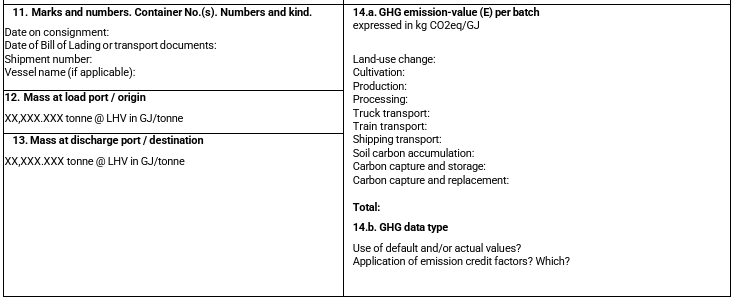
To address these challenges, GGL has introduced a new GHG Calculator Tool in 2025. This tool is available to all GGL-certified operators who intend to apply for a Transaction Certificate. The calculation methodology follows the European Commission Directive (EU) 2018/2001 and appeared to be in Microsoft Excel file which provide a user-friendly solution to all certified GGL operator.
Can I use this calculator to calculate my company’s overall carbon footprint?
The short answer is unlikely. The calculator is designed specifically to calculate product carbon footprint for GGL-certified biomass fuels—not the corporate carbon footprint of an entire company. Even biomass companies with limited activities may find that many of their broader operational boundaries fall outside the tool’s scope. Therefore, while the tool is extremely useful for GGL compliance and for TC applications, it cannot be used to calculate or report a company’s total GHG emissions.
Despite this limitation, the GGL GHG Calculator remains an important and practical resource. It is user-friendly, designed with clear fields and simplified pathways, but it still requires operators to have basic knowledge of GHG concepts and supply-chain data in order to use it correctly and avoid calculation errors.
How Thinkinbio Can Help
For operators who require guidance, ThinkinBio offers training on the GGL GHG Calculator, as well as consultation services for GGL certification, gap analysis, documentation support including calculate organizational carbon footprint. With proper understanding and professional assistance, companies can navigate GHG requirements with confidence and meet the increasing sustainability expectations of global markets.
Want to learn how we can support your goals?
Explore more about our services here.
Let us walk the journey of responsible business with you.
Share the article on social media: